


By now, one thing should be clear:
High performance is not a personality trait.
It’s not motivation.
It’s not discipline.
It’s architecture.
This series was never about self-improvement.
It was about system design—because systems scale when motivation doesn’t.
The Problem Most People Never Diagnose
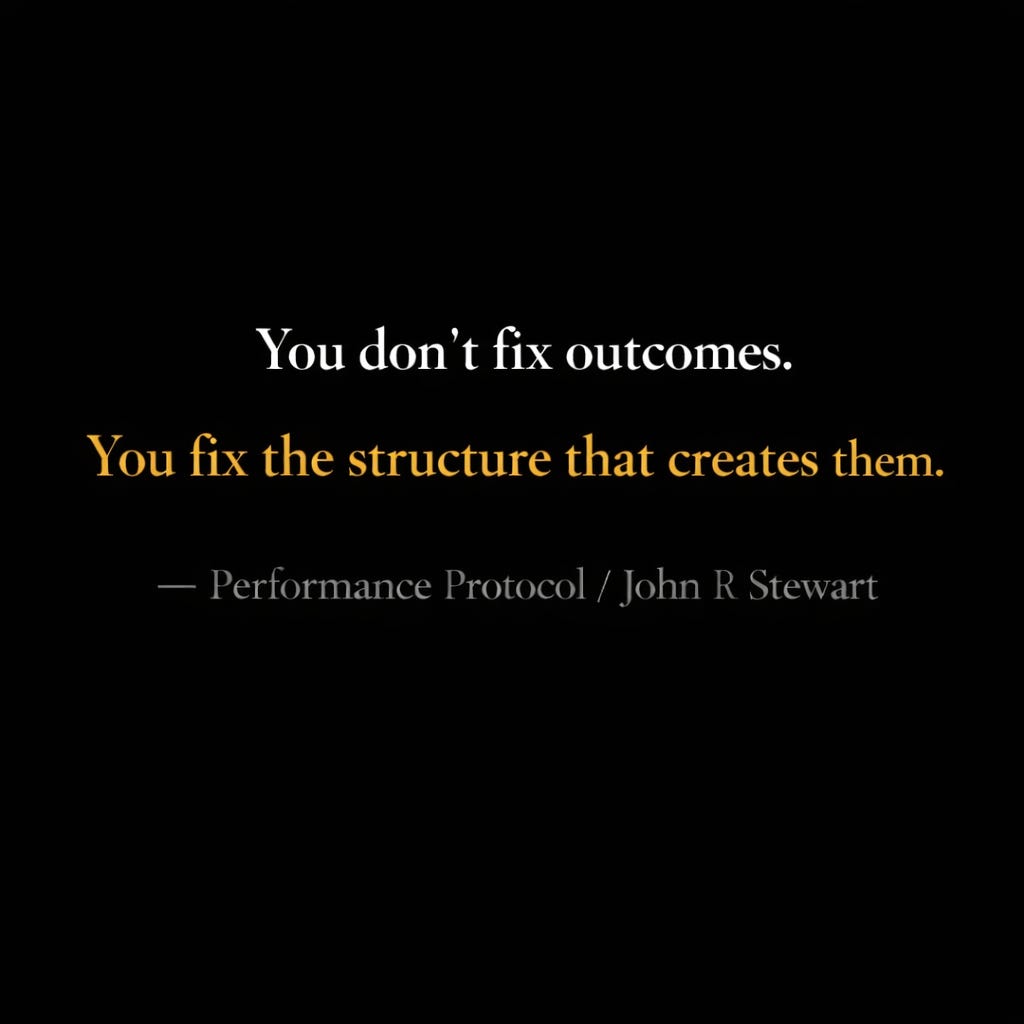
Most people try to fix outcomes.
They want:
More focus
Better habits
Consistency
Confidence
Discipline
So they apply pressure at the top:
Try harder
Want it more
Set bigger goals
Shame themselves into action
This fails because behavior is downstream of structure.
You don’t fix outputs by yelling at them.
You fix inputs.
The Performance Protocol Stack (Complete)
Here is the full operating system, from the bottom up:
1. Sleep Is the Foundation
If recovery is broken, everything else is noise.
2. Stress Is Load—Recovery Is the Constraint
You don’t burn out from effort.
You burn out from insufficient recovery.
3. The Nervous System Is the Control Layer
Regulation determines capacity.
Dysregulation sabotages everything.
4. Motivation Fails—Systems Don’t
Willpower is volatile.
Structure is stable.
5. Discipline Is a Consequence, Not a Trait
Consistency emerges when choice is removed.
6. Your Environment Is the Algorithm
Defaults decide behavior long before intention arrives.
7. Identity Is Built From Repetition
Who you are is a lagging indicator of what you repeatedly do.
This is not philosophy.
It’s mechanics.
Why This Order Matters
Most people try to start at identity.
They ask:
“Who do I need to become?”
That’s the wrong question.
The correct question is:
“What structure would force the behavior that produces the identity I want?”
When you build bottom-up, identity becomes inevitable.
The Protocol in Practice
This is not a checklist.
It’s a way of thinking.
When something isn’t working, you don’t ask:
“What’s wrong with me?”
You ask:
Is recovery sufficient?
Is stress calibrated?
Is the environment aligned?
Is the system enforcing repetition?
Failure becomes diagnostic, not personal.
What High Performers Actually Do Differently
They don’t:
Rely on motivation
Negotiate with themselves
Romanticize discipline
Personalize inconsistency
They:
Design constraints
Engineer defaults
Reduce decisions
Let systems carry them when energy is low
This is why they look disciplined under pressure.
They’re not.
They’re well-designed.
The Real Definition of Discipline (Reframed)
Discipline is what observers call behavior that no longer requires effort.
That’s it.
Once the system is correct:
Discipline disappears
Friction drops
Identity stabilizes
Performance compounds
The Final Protocol Principle
You don’t rise to the level of your goals.
You stabilize at the level of your systems.
If you want a different life, don’t aim higher.
Build deeper.
Design the structure.
Run the protocol.
Let the outcomes take care of themselves.