


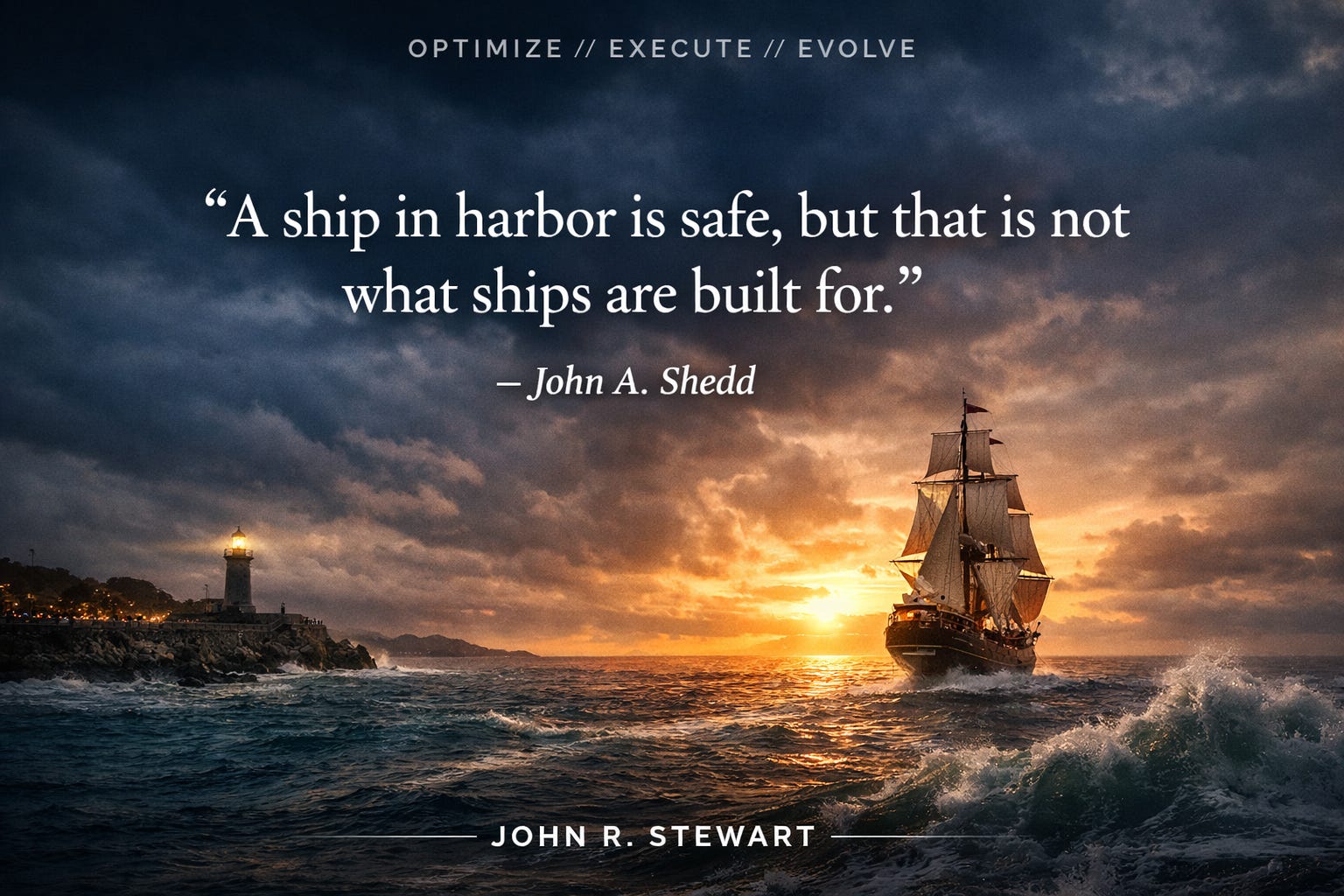
We are conditioned to fear the crash. We worry about the failed startup, the rejected proposal, or the investment that hits zero. We treat failure as the ultimate predator of a well-lived life.
But data suggests we are looking in the wrong direction. When we look back, it isn’t the scars that haunt us—it’s the skin we never put in the game.
The Anatomy of an Open Loop
In his extensive research on the human psyche, author Daniel Pink uncovered a recurring glitch in how we perceive risk. He noted:
“We regret the chances we didn’t take far more than the mistakes we made.”
This is the fundamental difference between a closed story and an open loop. When you try and fail, the story ends. You process the data, lick your wounds, and move on. But when you hesitate, the story never starts. You are left with a permanent “What if?” that occupies mental real estate for decades.
Pink identifies this specific category as Boldness Regrets. These aren’t catastrophic errors in judgment; they are moments where we chose the comfort of the sidelines over the uncertainty of the arena.
The Asymmetry of Consequence
Why is hesitation so seductive? Because the costs are delayed.
Action has immediate, visible risks: embarrassment, financial loss, or temporary instability.
Inaction feels responsible in the moment. It wears the mask of “prudence” or “waiting for the right time.”
However, the math of regret is asymmetrical. The sting of a mistake fades as we gain new experiences. But the weight of an untaken path grows heavier over time. As the years pass, the “safe” choice you made at thirty becomes the ghost that follows you at eighty.
The Bezos Test: Solving for “Age 80”
In 1994, Jeff Bezos sat in a comfortable office at a high-end hedge fund. He had a prestigious title and a significant paycheck. When he proposed leaving it all to sell books on a nascent platform called the “Internet,” his boss gave him a piece of advice that sounded logical:
“This sounds like a really good idea… but it might be better for someone who doesn’t already have a good job.”
The logic was simple: You have too much to lose. Bezos bypassed the immediate logic by using what he termed the Regret Minimization Framework. He projected himself to age 80 and looked back at his life. From that vantage point, the “risk” of losing a high-paying job in his thirties was invisible. What was glaringly visible, however, was the regret of watching a technological revolution from the sidelines.
“I knew that when I was 80, I was not going to regret having tried this... I knew that the one thing I might regret is not ever having tried.”
Implementing the Protocol
To apply the Boldness Protocol to your own life, you must stop measuring the next six months and start measuring the next six decades. When faced with a crossroads, ask:
Is this a Closed Story or an Open Loop? If I fail, will I be able to live with the story? If I don’t try, will I be able to live with the question?
Am I being prudent or just afraid? Is there a legitimate reason to wait, or is “timing” just a shield against the fear of rejection?
The 80-Year-Old Audit: Project yourself to the end of your life. Does this current “risk” still look big, or does the missed opportunity look bigger?
The Final Tally
Most people spend their lives trying to avoid mistakes, unaware that hesitation is the ultimate mistake. Failure is a teacher; it provides data, resilience, and a narrative. But hesitation provides nothing but silence.
The real risk isn’t standing in the middle of the arena and falling; the real risk is standing close enough to see the opportunity clearly and still choosing the sidelines.
Failure creates stories. Hesitation creates ghosts. And ghosts follow you much longer.
If you’re ready to stop watching from the sidelines and start closing your open loops, it’s time to move from theory to action. The Boldness Protocol is just one of many mental models designed to help you navigate high-stakes decisions with clarity and courage. Visit performanceprotocol.ai/protocols/boldness to sign up and gain access to the tools, research, and frameworks needed to eliminate the “ghosts” of hesitation and build a life defined by stories, not regrets.